

Note: the interview was conducted on the 10th of February 2025, in English. To keep the answers close to the original answers, we decided to keep the text in English rather than translate it to Dutch.
Jay, continuing our earlier discussion: focusing on string theory, which parts of the description of a theory of quantum gravity are we still missing?
I think that one of the main problems in string theory is mentioned several times in the book: what is string theory? The original viewpoint on string theory as a theory of strings fluctuating in a set background only provides what is known as a perturbative series, which we know is only part of the answer. How is string theory defined in general and what are its defining equations beyond those perturbative, asymptotic expansions? We only know the answer to this in special cases like in AdS/CFT, in which string theory is not defined as a perturbative series, but has a non-perturbative definition which in this case is called N=4 super Yang-Mills theory. This provides a solution for quantum gravity in a class of space-times known as asymptotically Anti-de Sitter spaces by, in a way, avoiding the quantum gravity problem itself: instead of quantizing gravity one realises that quantum gravity emerges from a gauge theory without gravity. But what is the definition of string theory in universes more like our own: asymptotically flat or asymptotically de Sitter space? Does holography provide an answer to this? This is one of the missing pieces for which recently many new clues have been found.
Another important problem is that of experimental smoking guns. Which experiment can one perform that would decisively point the way towards string theory? In fact, this is not a problem of string theory but of any approach to quantum gravity. Related to it and to the previous point I made is the theoretical problem of finding well defined non-perturbative observables whose measurement would serve as smoking guns. In Anti-de Sitter space these observables are pretty much anything you can compute at the boundary but it is not clear even how to define such observables for asymptotically flat and de Sitter spaces. Because this has proven to be a quite difficult question for which it is not clear if there is even a positive answer, some of the focus has been directed towards finding approximate observables, and in fact part of the string community has directed their efforts to bottom-up constructions of flat space and de Sitter quantum gravity.
A very elusive problem is that of finding out what is the correct extension of the standard model of particle physics at high energies. String theory provides a framework that extends quantum field theory and is thus suitable for particle physics model building. The problem is: how does one do these extensions consistently? This is partly the motivation behind the Swampland programme in string theory aimed at identifying which quantum field theories are consistent with high-energy (‘ultraviolet’) physics. Perhaps the unsatisfactory part of this programme is that it is rather restrictive if you have maximal supersymmetry or just a lot of supersymmetry, but once you decrease the amount of supersymmetry, criteria for being outside the swampland become rather loose (i.e. many theories may be compatible with ultraviolet physics). As far as I understand, if you do not have any supersymmetry at all, there are very few criteria, if any, that such ultraviolet complete theories must satisfy. Related is whether any quantum field theories can be consistently defined in a background de Sitter space that is long lived for a long enough period of time to host our 14-billion-year-old universe. This is still a point of debate within the string theory community.
There are other problems that are also interesting for which there has been a lot of progress lately, such as the black hole information paradox and black hole microstate counting. In the context of the black hole information paradox one would still like to know exactly what is the process by which information leaks from the black hole interior to the exterior. And in the context of microstate counting one would like to understand how to use these techniques for astrophysical black holes – admittedly this last point likely requires first solving one of the previous problems I mentioned such as understanding how to describe our effectively four-dimensional universe using the framework of string theory.
You have conducted 37 interviews with famous theoretical physicists. Was there any interview that stood out to you? Which interviews are the most memorable to you?
(Laughs) There are many interviews that were memorable for one reason or another. I enjoyed very much the interview with Abhay Ashtekar because it was both extremely clear and extremely long. In fact, I think it was the longest interview in the book – a bit more than 3 hours, which can be contrasted with perspectives from more junior researchers in the field such as Bianca Dittrich and Thomas Thiemann. I found it to be a clear exposition of loop quantum gravity..
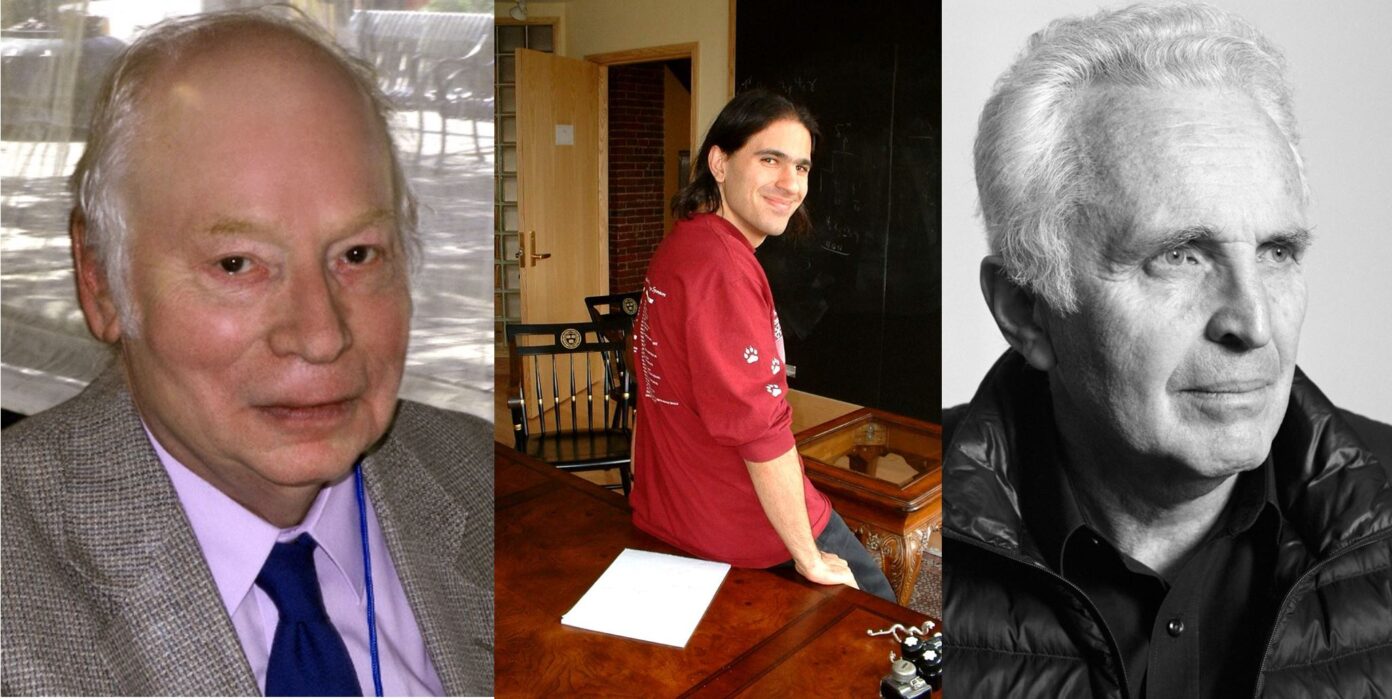
The interview with Steven Weinberg was also memorable for different reasons. For one, I had completely missed the fact that he had worked on string theory, which was embarrassing, and secondly, he abruptly ended the interview saying “I have spoken enough”. I took comfort from his secretary at the time who told me “he actually gave you a lot of time” – that was about 35 minutes, even though I had flown all the way to Texas for the interview.
The interview with Nima Arkani-Hamed was a lot of fun and very insightful, because he has an extremely intuitive way to understand why gravity is just different if you want to combine it with quantum mechanics. The interview ended at 2am with both of us very hungry, so we had to search for a falafel in Copenhagen.
I also liked very much the interview with Eva Silverstein, because she is one of the people who is part of large scale collaborations such as the Planck collaboration. I found it inspiring that she was taking ideas from string theory, trying to find common features in the “string landscape” of 10500 possible universes and apply it to the low energy physics of inflation. In particular, she was trying to focus on aspects of inflation which were then being constrained by observations.
Another interview I cherish is the interview with Alexander Polyakov, because he is really one of a kind in a sense. He is of the opinion that string theory should be formulated in 4 dimensions (not in 10 dimensions) and that we simply have not yet found the correct string theory in 4 dimensions. He also sees string theory not as something fundamental but as an effective description that is supposed to work better than the standard model. He is also very critical of other more speculative topics within string theory like the multiverse. In other words, he appeared to me to be more grounded, an attitude that was very different from the one the majority of the interviewees had during those days. I also loved his statement that if you look at a boiling kettle long enough you will end up finding string theory. I took from it that string theory is kind of inevitable.


I think the book is a gold mine for people working on quantum gravity. How was the perception after you published the book? And did the book meet the goals you had in mind for it at the start of the writing process?
I don’t have a very good answer to this because I don’t have enough data points regarding the book. To what concerns the perception of the book, I can say that the book sells more copies than an average academic book but many fewer copies than a recommended textbook. It is no bestseller by any means. I’ve also received very few comments from both the interviewees or more senior peers in the field. However, in the past few years I met many young PhD students and postdocs who make sure to tell me that the book has been extremely useful to them. That was part of what the book was intended for, to guide and inspire young researchers in the field, and so I am very happy when I receive these comments, given that it took a lot of time to complete the book.
The other goal I would have hoped for was for the book to be taken into account in the public sphere and in particular in debates that you sometimes come across on social media about quantum gravity or string theory. My impression is that the book has had absolutely no impact in this direction. Even if those researchers or members of the general public who are vocal about these subjects in the public domain know about the book, they certainly have not taken a moment of their time to perform their own critical “meta analysis” of the book and take it into account. This only tells me that these public debates are really not guided by openness or even an understanding of the actual state of affairs. Unfortunately, I think these debates paint a negative picture of the field, which even physicists, both senior and junior, in other parts of physics come to believe in. As I am involved in many interdisciplinary activities, I often come across senior physicists who do not even know that the community of string theorists is at most 500 faculty members worldwide – a tiny minority compared to their own fields of soft matter, condensed matter, astrophysics or particle physics, for which their respective communities gather tens of thousands each.

You bring scientific research to the general public by organizing the event ‘Science and Cocktails’, which you also mentioned before. You also organize this event in Amsterdam. Could you tell a bit more about these events in particular?
I started organising these events 15 years ago while I was a PhD student in Copenhagen. The aim was to blend education and entertainment by means of events that combine science lectures with music or art performances and, of course, cocktails. The events currently run in 3 different cities (Copenhagen, Amsterdam and Brussels) and its largest edition (Copenhagen) can attract more than 1000 guests per event. The events integrate well in the night culture, are part of the cities’ weekly entertainment options, and can be exciting, daring and, sometimes, unexpected. Underlying it are goals such as gathering support for science in the public sphere, raising awareness for diverse scientific and societal topics, and aiding in creating new role models in the public domain. For me personally, I feel it’s my role in society to maintain this platform so that people can become better acquainted with the current state of affairs of various disciplines, which would hopefully inform them how to make better decisions as citizens.
I personally dream about a society that values more the role of the scientist than a specific football player from Ajax, and a society that values more the role of a science-informed policy rather than unchecked facts uttered by prominent politicians and personalities.
Why have you chosen to do physics?
Well, I don’t have a good story to tell you about this. I was just led to it because I kept being challenged all the time. Originally, I was going to study computer science because I was very good at coding (I began coding when I was 12 years old) but the challenge of maths and physics attracted me and within physics I also pursued the most challenging subject that I could find – string theory. Not sure though if I should have stuck to computer science; I would have had it easier I think and likely would be richer by now. (Laughs)
And then you can also guess the last question. What is the role of a theoretical physicist in modern society?
Right, that is a good question (laughs). I think that part of the role of the theoretical physicist in modern society is embedded in the job description: to do theoretical physics, understand the universe, inspire the public, and of course educate the next generation of critical thinkers and physicists, some of whom will go on to other fields in society and apply the tools they’ve learnt. The other part, in my opinion, is to act as an agent in society in a way that embodies some of the core values of a physicist’s practice such as curiosity, critical thinking, openness, collaboration, shared knowledge, and drive toward finding optimal solutions that can lead to a better society, whatever form that might take.
For me this turned out to sort of culminate in developing ways to bring science and scientific thinking into public culture, art and performance, such as in initiatives like Science and Cocktails. By pursuing these ideas I attempt to bring awareness to the latest scientific discoveries, convey the unique contribution that science has to offer to society, establish new role models in the public domain, and contribute to a more informed society, in particular guided by scientific approaches to societal problems, so that citizens may be able to make informed decisions. I personally dream about a society that values more the role of the scientist than a specific football player from Ajax, and a society that values more the role of a science-informed policy rather than unchecked facts uttered by prominent politicians and personalities – I’m sorry to say this to football fans but I would find this utopian society a more healthy one than the one we currently have. In general, I think that theoretical physicists can be agents in society in many different ways, for instance by contributing to better organizational structures in society or being involved in think-tanks for science-based policies and interventions. In my opinion, it is a personal journey that every theoretical physicist should take in order to find their place in society beyond their job description.
Alle artikelen in deze serie:
- A conversation on quantum gravity
- A conversation on quantum gravity (2)